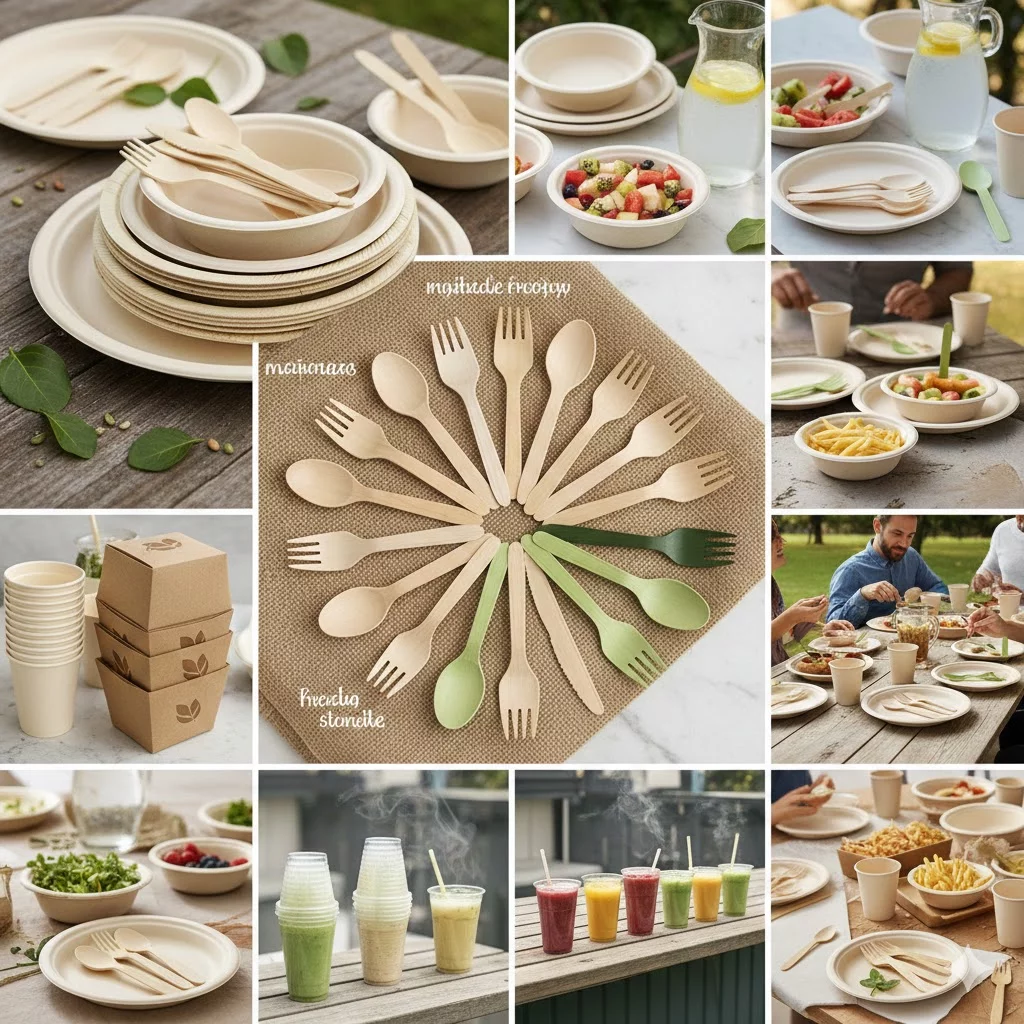
Have you ever worried about the environmental impact of disposable tableware when cleaning up after a party or discarding takeout containers? Traditional plastic tableware can take hundreds of years to decompose and releases microplastics that pollute soil and water sources. Today, eco-friendly disposable tableware is becoming a new favorite among American families, restaurants, and environmental enthusiasts, thanks to its material advantage of “coming from nature and returning to nature.” But do you really understand these eco-friendly materials? Are they safe and durable? Today, we’ll break down the core materials of common eco-friendly disposable tableware and reveal the science behind them.
1. Corn Starch Material: “Food-Grade” Raw Material That Becomes Fertilizer After Degradation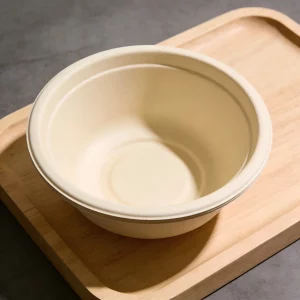
Corn starch tableware is one of the most “natural” eco-friendly options on the market. Its core raw material is food-grade corn starch, which is extracted from corn and mixed with a small amount of plant fiber to form tableware through compression molding. The magic of this material lies in its degradation process, which relies entirely on microorganisms in the natural environment—in soil, compost, or sewage treatment systems, microorganisms break down starch into carbon dioxide and water, which eventually return to the soil. Not only does it not cause pollution, but it also becomes nutrients for plant growth, truly achieving “from the earth, back to the earth.”
In terms of safety, corn starch tableware contains no harmful chemicals such as BPA or plasticizers. It can withstand high temperatures up to 120°C, making it suitable for holding hot soups, meals, and even microwave heating (please note the applicable temperature marked on the product). It fully meets the needs of daily family meals and takeout packaging. However, it has a minor drawback: its toughness slightly decreases when exposed to water, so it is more suitable for short-term use and not recommended for long-term soaking. In the United States, corn starch tableware is often used in children’s parties, family gatherings, and other scenarios, as parents don’t have to worry about the risk of children ingesting residual chemicals.
 2. PLA (Polylactic Acid) Material: Plant-Based Plastic, A Compostable “Eco-Friendly Alternative”
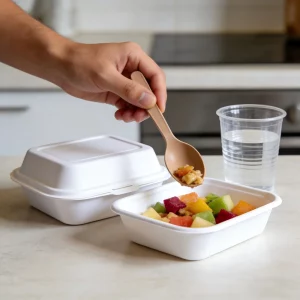
If you want the durability of plastic tableware while practicing environmental protection, PLA material is an excellent choice. PLA, short for Polylactic Acid, is made from renewable plant resources such as corn, sugarcane, and sugar beets. It is produced by fermenting these plants to extract lactic acid, which is then polymerized—making it a “plant-based plastic.”
Unlike traditional plastic, PLA tableware can be fully degraded into carbon dioxide and water in industrial composting conditions (temperature 55-60°C, appropriate humidity) in just 6-12 months without producing microplastics. Even in natural environments, it can decompose gradually, with far less impact on the ecosystem than traditional plastic. More importantly, PLA material has physical properties similar to traditional plastic—it is hard, not easily deformed, and can withstand temperatures ranging from -40°C to 110°C. It is suitable for various tableware types such as coffee cups, bento boxes, and cutlery, making it a popular choice among American food delivery platforms and coffee shops.
It should be noted that the degradation of PLA tableware requires specific composting conditions; it may not decompose quickly in ordinary household trash bins. Therefore, it is recommended to use it with compostable waste recycling systems. Currently, many U.S. states (such as California and New York) have improved their composting recycling systems, so choosing PLA tableware also better aligns with local environmental policies.
 3. Bagasse Material: Reusing Agricultural Waste, Durable and Eco-Friendly
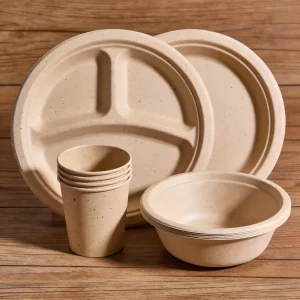
Bagasse tableware is made from residues left after sugarcane juicing—these agricultural wastes, which were originally discarded, are crushed and formed under high temperature and pressure to become durable disposable tableware. The core advantage of this material is “turning waste into treasure”: it not only reduces pollution from the incineration of agricultural waste but also reduces reliance on virgin resources, making it a typical representative of the circular economy.
The physical properties of bagasse tableware are impressive: its thickened design gives it strong toughness, making it not easily broken or deformed even when holding heavy objects. Its surface is specially treated to have excellent water and oil resistance, so it won’t leak when holding soups or sauces. At the same time, it contains no chemical binders and is formed through physical compression, so its safety is guaranteed. It is suitable for barbecues, outdoor camping, bulk dining in restaurants, and other scenarios. In terms of degradation, bagasse tableware can be fully decomposed in the natural environment within 3-6 months, making it a cost-effective choice that balances practicality and environmental friendliness.
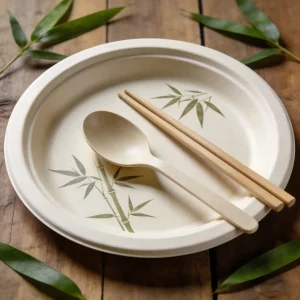 4. Bamboo Pulp/Paper Pulp Material: Made from Virgin Fibers, Recyclable and Reusable
Bamboo pulp and paper pulp tableware are made from virgin plant fibers such as bamboo and wood through processes like beating, molding, and drying. They are commonly used in paper plates, paper cups, paper bowls, and other products. Bamboo grows quickly and is highly renewable, making it more environmentally friendly than wood. Paper pulp materials, on the other hand, can be reprocessed from recycled waste paper, further reducing resource consumption.
The prominent feature of this type of tableware is “lightweight and portable,” with good air permeability. It is suitable for holding dry or semi-dry foods such as bread, sandwiches, and fruits; some thickened paper pulp tableware also has a certain degree of leak resistance, making it suitable for holding porridge, yogurt, and other liquid foods. In terms of degradation, bamboo pulp/paper pulp tableware can naturally decompose in soil within 1-3 months and does not produce harmful gases when burned, making it a “full-life-cycle eco-friendly” product. In the United States, many schools, kindergartens, and children’s activities prefer this type of tableware because it is soft, won’t scratch children, and its safety has passed strict testing.
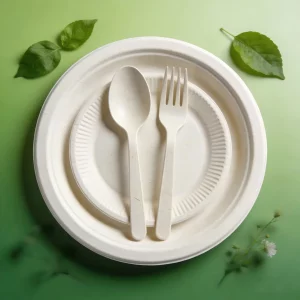 5. Core Advantages of Eco-Friendly Materials: More Than Just “Degradable”—It’s About Health and Responsibility
Choosing eco-friendly disposable tableware is not only about reducing the burden on the planet but also about protecting the health of yourself and your family. Traditional plastic tableware may release harmful chemicals in high-temperature environments, while eco-friendly materials are all made from natural plants—they are odorless, residue-free, and have passed safety certifications from the U.S. FDA (Food and Drug Administration) and ASTM (American Society for Testing and Materials), making them safe for direct contact with food.
From a social perspective, the popularization of eco-friendly tableware can also promote the spread of green consumption concepts. In the United States, more and more states are restricting the use of traditional plastic tableware (for example, California has banned restaurants from providing disposable plastic tableware unless customers actively request it). Choosing eco-friendly tableware not only complies with local policy trends but also allows businesses and families to practice environmental responsibility in daily consumption.
Conclusion: Choose Eco-Friendly Materials, Make Every Meal a Gentle Gesture to the Earth
Disposable tableware was invented to make life more convenient, but it shouldn’t come at the cost of the environment. Eco-friendly materials such as corn starch, PLA, bagasse, and bamboo pulp have achieved a balance between “convenience” and “environmental protection” through scientific processes, allowing us to enjoy the convenience of life while contributing to protecting the planet.
Next time you buy disposable tableware, take a moment to check the material label on the packaging—choosing eco-friendly materials is not only a choice for safety but also a choice for a sustainable lifestyle. Let every discard after a meal no longer be a burden on the environment, but a gentle confession to the earth.