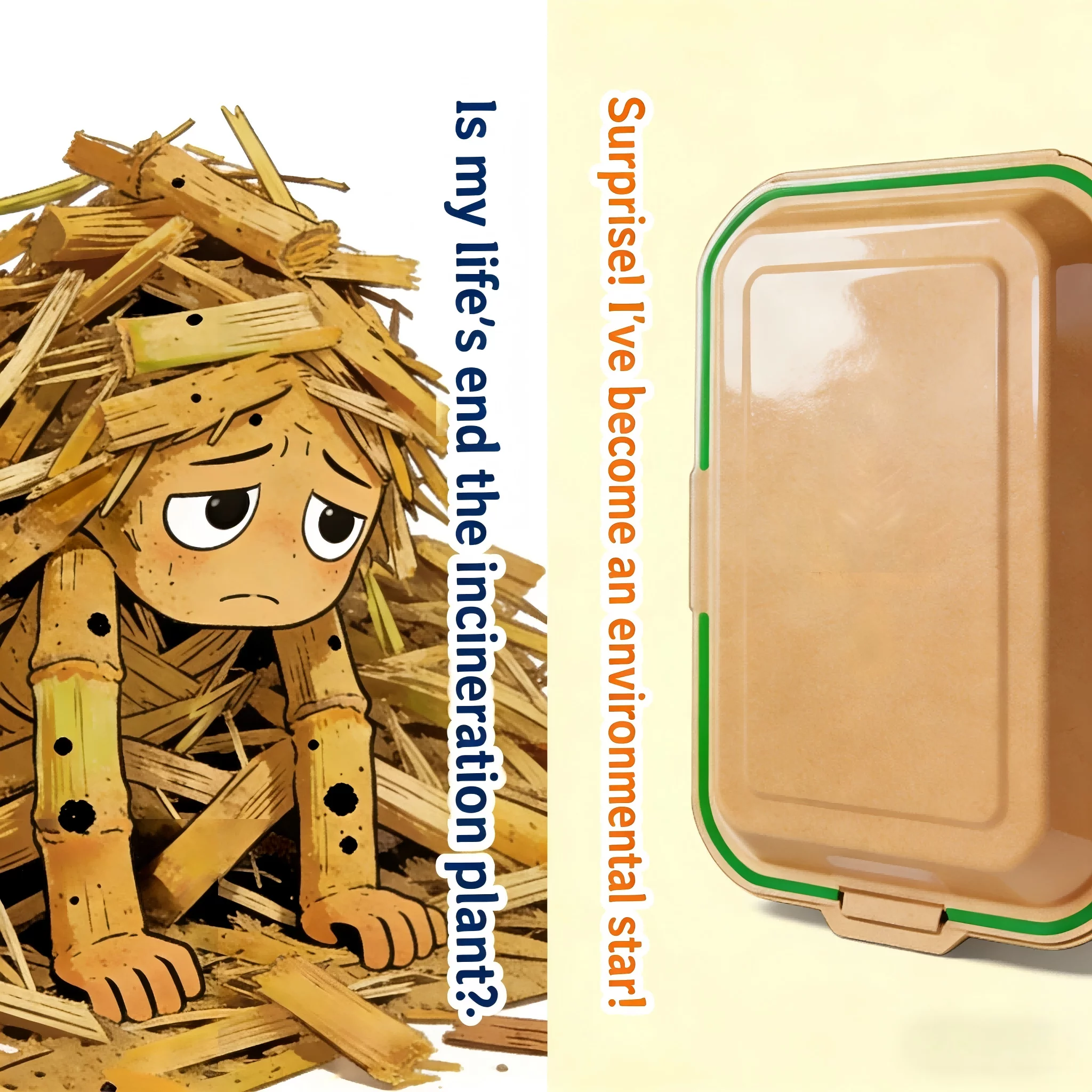
For every ton of sweet sugar produced, 2–3 tons of sugarcane bagasse are left behind and often neglected. In the past, it was either burned (contributing to PM2.5) or left to rot (taking up space as large as a football field)—a total “environmental nuisance.”
But today, it’s making a comeback! 
Technology has given it a second life—transforming it from “agricultural waste” into a “top-tier eco-material,” becoming a precious raw material for biodegradable products!
 Its “transformation” is simple:
Crush → 2. Squeeze → 3. Mold
It’s like giving it a chance to “reshape its life,” turning into familiar items like food containers, packaging bags, flower pots…
 What’s even cooler is its “ultimate fate”:
Traditional plastic: “Lazes around” in nature for centuries, an almost immortal pollutant.
Sugarcane bagasse products: Once in the soil, they’re completely “devoured” by microorganisms in 3–6 months—breaking down into water, carbon dioxide, and a bit of organic fertilizer. Truly returning to nature and even enriching the soil!
 VS Plastic, it wins hands down:
 Non-toxic and safe: Made from natural plant fibers, no need for harmful chemicals, safe for direct food contact. Durable: Don’t underestimate it! Waterproof and heat-resistant (from -10°C to 120°C), handling soups and liquids with ease. Versatile: Your takeout boxes, coffee cups, snack packaging, office plant pots… may all feature this “invisible eco-hero.”
 Time for a soul-searching question:
If starting tomorrow, all takeout packaging were required to switch to sugarcane bagasse containers, what would be your first reaction?
Raise both hands in agreement! It’s about time! 
A bit worried: Will it be more fragile? Will prices go up? 
Serious question: Which trash bin should it go into after use? 
Quietly share: Let more people know about this black tech! 
 Join the discussion in the comments:
What other eco-friendly products made from waste materials have amazed you?